
Get an Executive Coach - Executive Coaching Services
The higher you move, the fewer conversations are completely neutral. Your team looks to you for direction. Your peers have their own priorities. Your board expects judgment. Some decisions are too sensitive, or too tangled, to navigate with people who are part of the situation.
An executive coach gives you a confidential place to think clearly, challenge assumptions, see blind spots, and turn insight into action: a relationship built entirely around your growth, your decisions, and your leadership challenges.
From "reliable" to "the obvious choice"
A regional head at a large banking group came into coaching about two years before a Managing Director role opened up. On paper, he was already doing MD-level work: he ran the numbers, hit his targets, managed a large team without drama. What wasn't working was influence. In leadership committee meetings, his ideas got a nod and then quietly got overridden. He was seen as reliable, not as someone who belonged in the room where direction actually got set.
The early sessions weren't about strategy. They were about a pattern: he prepared exhaustively for every meeting, then deferred the moment anyone senior pushed back, treating disagreement as a signal to retreat instead of a normal part of the conversation. Working through the MARK Model, coaching started with Mindset, separating "I might be wrong" from "I should back down", then moved to Action: rehearsing exactly how he'd hold a position in the next real meeting on his calendar, not a hypothetical one.
Eighteen months in, colleagues started describing him differently: still someone who listened, but no longer someone who folded. When the MD role opened, the board didn't just consider him. They asked him to apply.
Details have been changed to protect confidentiality. This reflects a real, representative coaching engagement.
Schedule a Confidential Executive Coaching ConversationBenefits of executive coaching for leadership growth
Executive coaching provides value that should show up outside the coaching room: in decisions, conversations, and leadership effectiveness your team can actually see.
Self-awareness
Understanding how your behavior, assumptions, and leadership style affect others.
Decision quality
Separating facts from interpretation to make clearer choices in complex situations.
Leadership skills
Communication, influence, delegation, stakeholder management, coaching, and conflict capability.
Accountability
Turning intentions into actions and reviewing what actually changed.
Increased productivity
Reducing unnecessary executive involvement and improving where attention goes.
Professional growth
Building the capabilities required for greater responsibility.
Team effectiveness
Creating stronger ownership, decision-making, and alignment in the people around you.
Business performance
Connecting leadership behavior with execution, customer outcomes, retention, and other relevant measures.
Executive coaching enhances capability rather than replacing it. Done well, it should unlock better judgment, stronger performance, and a measurable return on investment, not dependence on the coach.
Endorsed by the people who wrote the book on this
Endorsed by the authors who wrote the books on executive coaching, not people who simply admire the idea of it. These three names have shaped how the field thinks about coaching and leadership, and each has worked directly with Rajiv Sharma.

"Rajiv Sharma gives timeless principles that help both individuals and organizations in their pursuit of excellence. You'll discover challenging and compelling insights into the MARK Model. This coaching is your call to action to improve your effectiveness and success in life."
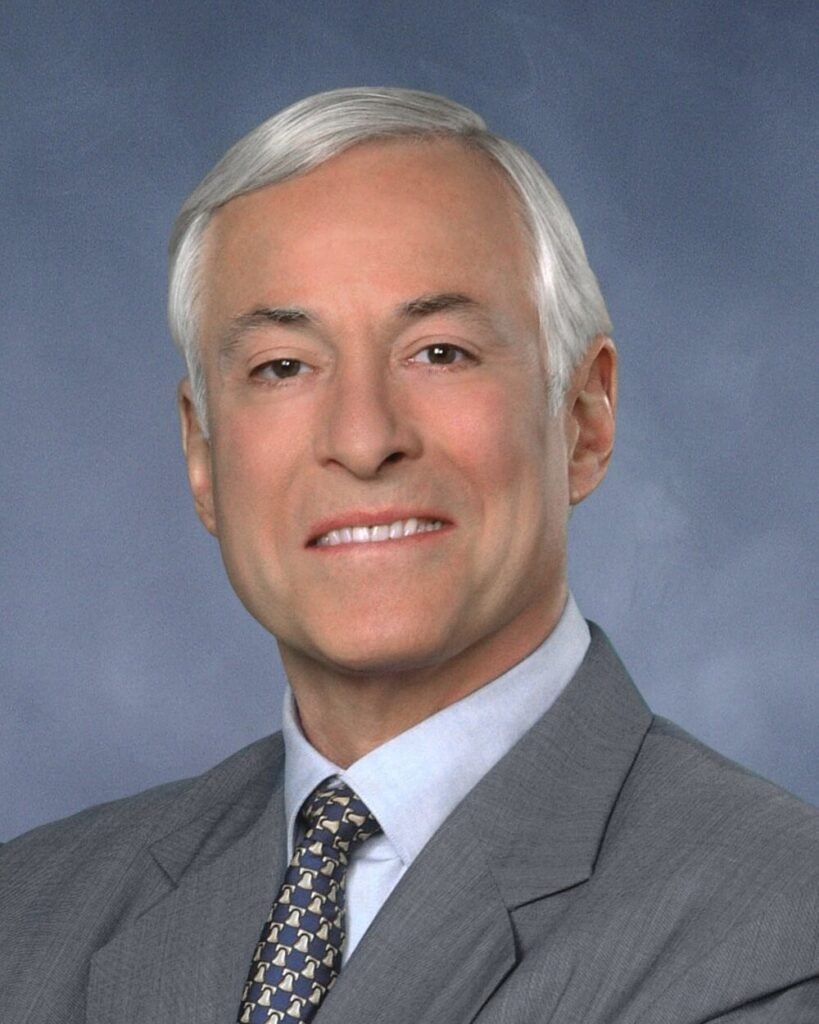
"Rajiv is one of the top professional trainers and speakers in the world today. He has over 30 years of experience in Sales, Corporate Strategy, and Value Chain creation. He's thoroughly qualified and proficient to help you and your people become absolutely excellent, ensuring that your organization is at the top in this very competitive market."

"Rajiv Sharma has connected four pillars of effectiveness and success: Mindset, Action, Repetition & Knowledge, and using these tools in life coaching programs, you can create a roadmap to achieve your goals. It provides the key to unlocking your potential and achieving sustained greatness. I strongly recommend this program."
About Rajiv Sharma

Founder and Director of NLP Limited, working with senior leaders across the UAE, Nigeria, and India.
- ✓ ICF PCC-credentialed coach
- ✓ Ranked #5 globally by Global Gurus for NLP
- ✓ Creator of the MARK Model® and the LeadFORTH® Framework
- ✓ Author of Make a MARK in Life and AI-Powered Sales Success
- ✓ Trained 850,000+ people across 57+ countries
- ✓ Works with clients across pharma, banking, FMCG, oil & gas, and government sectors
- ✓ Delivers ICF Coach Education and ICF Coach Training
- ✓ Delivers NLP & ICF Leadership Coaching
Endorsed by Marshall Goldsmith, Brian Tracy, John Mattone, and Dr. Richard Bandler.
Signature frameworks
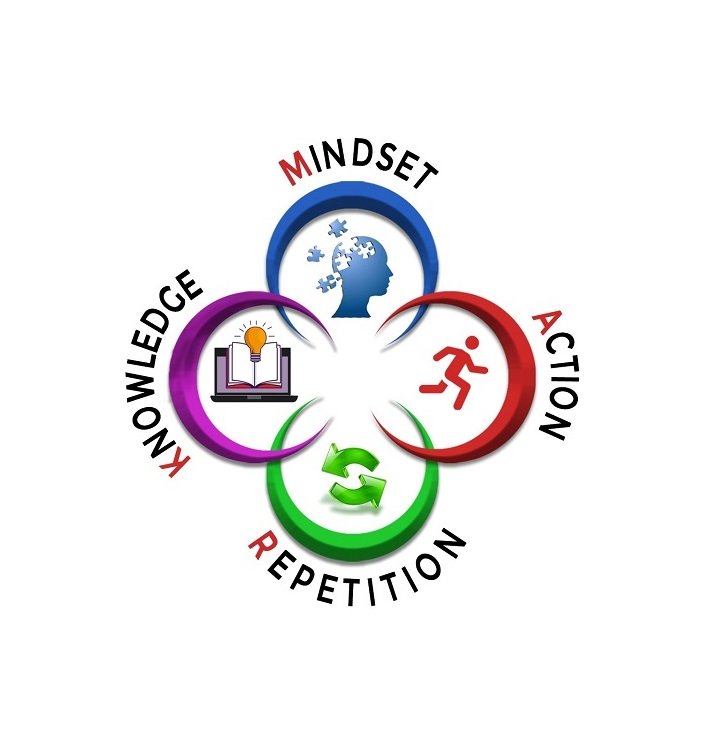
The MARK Model®
Four disciplines behind real behavior change: Mindset, Action, Repetition, and Knowledge, the same four pillars John Mattone references above. It is less a framework you learn and more one you rebuild your habits around.
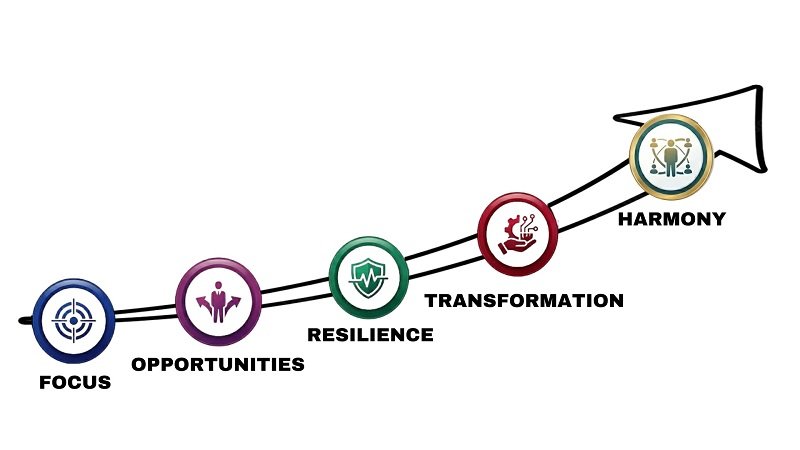
LeadFORTH®
Five disciplines that move a leader from reacting to directing: Focus that cuts through competing priorities, Opportunities created rather than waited for, Resilience that holds under real pressure, Transformation that outlasts the initiative, and Harmony that keeps teams aligned, not just compliant. Each one addresses a specific failure point most leadership advice skips over.
What to expect before you book a call
The practical questions that usually come up before a first conversation, answered honestly rather than left for you to guess.
What does it cost?
Every engagement is scoped individually, based on the objective, seniority, and duration involved. Pricing gets discussed directly and transparently in the first conversation, not guessed at online.
Virtual or in person?
Sessions are mostly virtual. In-person sessions can be arranged depending on Coach Rajiv's schedule and travel to your city, and this gets confirmed in that first conversation.
How long does it take?
There is no fixed duration. Length reflects the complexity of the goals and the pace at which change can realistically be applied and absorbed.
Ready to explore executive coaching?
You probably do not need another person telling you how an executive is supposed to behave. You may need a conversation that helps you see what you are not seeing: a place to question assumptions, think through a difficult decision, prepare for a bigger role, or change a pattern that no longer works. The first conversation has one objective: to determine whether coaching can create meaningful value for you.
Schedule a Confidential Executive Coaching ConversationExplore executive coaching in more depth
Everything below is the same detail we cover with every client, framework mechanics, the process, FAQs, and the research behind it, just collapsed so you can open only what's relevant to you.
Executive coaching is a personalized, one-to-one development partnership between a coach and an executive. Executive coaching involves a structured development process, not a set of ready-made answers. It helps you think better about the decisions, relationships, behaviors, and leadership challenges that matter right now, and it is built specifically for leaders and leadership teams operating under real pressure.
A typical coaching engagement begins with a clear objective. The executive and coach agree on what needs to change, how progress will be measured, and what confidentiality means within the coaching relationship. Each coaching session may focus on a live business issue, a leadership behavior, a stakeholder challenge, a strategic decision, a leadership transition, or an opportunity for growth.
The coaching process: five stages
The best coaching does not create dependence. It helps enable leaders to become more self-aware, more deliberate, and more capable of navigating complexity independently. Where appropriate, there may also be support in between sessions around a critical conversation, decision, or leadership moment.
Most executive coaching engagements fail for the same handful of reasons: a vague objective, a coach who never gets challenged, or a relationship that quietly turns into just another item on the calendar. Naming these risks early is what keeps the engagement from wasting everyone's time.
No clear objective
"Become a better leader" is too vague. Strong executive coaching starts with specific development goals and observable outcomes.
Performing instead of being honest
Coaching becomes more useful when an executive can explore uncertainty, mistakes, and difficult relationships without performing for the coach.
Expecting the coach to become a consultant
A business coach, mentor, consultant, and executive coach may all add value, but they do different work. Executive coaching is distinctly focused on your own judgment and choices.
Insight without behavior change
A brilliant conversation means little if Monday morning looks exactly the same. Whether coaching helped matters less than what changed because of it.
Weak organizational alignment
Individual professional development and organizational goals need enough alignment to make the engagement relevant, while protecting confidentiality.
Choosing comfort over challenge
The right coach is supportive without becoming agreeable: a sounding board that still challenges assumptions and convenient explanations.
Trying to change everything at once
Leadership growth accelerates when the engagement focuses on the few behaviors or decisions that can create the greatest leverage.
There is no single universally accepted "7 pillars of coaching" model across the coaching profession. For executive coaching, these seven practical pillars provide a useful framework for meaningful change.
Clarity
What outcome matters, and why now?
Self-awareness
What patterns, assumptions, strengths, triggers, and blind spots are influencing your leadership?
Challenge
What are you not questioning because it feels familiar, comfortable, or politically easier?
Choice
What other ways of thinking, leading, communicating, or responding are available?
Action
What will you do differently in the real world of work?
Accountability
What did you commit to? What happened? What did you learn?
Integration
How does the new behavior become part of your leadership style, rather than a temporary effort?
The framework is deliberately simple. Coaching should create movement, not complexity.
An experienced executive often does not need more information. They need better perspective.
Sometimes the issue is a skill. Sometimes it is a belief. Sometimes it is a relationship. Sometimes it is a behavior that once helped you succeed but now limits your full potential. This is where executive coaching helps leaders turn that kind of insight into action, supporting both personal and professional growth so you can lead with confidence. That is why the coaching approach should be tailored around the person, role, context, and desired outcome. A good coach will always customize coaching approach and methodology to fit the executive in front of them, not the other way around.
Our executive coaching services are built around real leadership work, not a generic syllabus, and they are designed to translate into measurable business outcomes.
The coaching service may support an executive who is moving into a larger role, stepping into the C-suite, leading organizational transformation, inheriting a new team, or expanding internationally. It may support someone managing significant leadership challenges, preparing for succession, or leading through uncertainty. It can also mean strengthening leadership skills, strengthening the leadership pipeline, improving business performance, or preparing for enterprise leadership.
This is where leadership coaching becomes practical leadership development. A leader may understand leadership in theory and still struggle to delegate. They may know how important listening is and still interrupt under pressure. They may understand strategy and still avoid a difficult stakeholder conversation. The development of leadership happens when knowledge becomes behavior.
Executive leadership coaching becomes particularly relevant when the role changes faster than the leader's habits. A promotion may require less operational involvement and more enterprise thinking. A founder may need to move from solving problems personally to building leaders who can solve them. A functional leader may need to influence across the entire organization rather than optimize one department. That requires a broader approach to leadership and a deeper understanding of leadership at enterprise level.
A high performer may discover that taking their leadership to the next level requires different behavior, not simply more effort. These are significant leadership shifts, and executive coaching for leaders can support people moving into bigger executive roles, including first-time executive appointments, C-suite transitions, succession planning, international assignments, mergers and transformation, rapid growth, role expansion, cross-functional leadership, and strategic repositioning.
The aim is enhanced leadership that works in the leader's real environment, not an idealized model of what leadership should look like.
The more senior the role, the fewer places there may be to think out loud without consequence. That makes a confidential space essential. Executive coaches provide that space, and should act as a sounding board without becoming an echo. The leader needs room to examine difficult decisions, sensitive relationships, uncertainty, political dynamics, and personal leadership patterns.
Where an organization sponsors the coaching, confidentiality boundaries should be agreed at the beginning. The sponsor may need visibility on the objective and broad progress, while the content of coaching conversations remains protected according to the agreed coaching relationship.
The International Coaching Federation (ICF) places ethical boundaries, confidentiality, clear agreements, trust, and client growth within its professional standards and coaching competencies.
A strong executive coaching process is structured enough to create movement and flexible enough to respond to what is happening now.
Fit and chemistry
Determining whether this is the right coach for the executive.
Contracting
Roles, confidentiality, expectations, engagement boundaries, and measures of success get clarified.
Diagnosis
Exploring the business context, development goals, leadership challenges, strengths, patterns, and stakeholder expectations.
Development plan
Narrowing to the few priorities that could create the greatest impact.
Coaching sessions
Working through live issues, decisions, leadership behavior, and opportunities for growth.
Application
Testing different behaviors, conversations, and decisions in the workplace.
Review
Evaluating progress using observable evidence, feedback, and agreed measures.
The approach to executive coaching should remain personalized throughout. The framework provides discipline. The leader's reality determines the conversation.
Global executive coaching requires more than coaching someone on another continent. Leaders working across markets may need to navigate different expectations around hierarchy, communication, trust, conflict, authority, speed, and decision-making. Effective international coaching therefore requires cultural intelligence as well as strong coaching competencies.
The goal is not to give leaders a list of cultural stereotypes. It is to help them notice context, question assumptions, adapt intelligently, and still lead authentically.
Where global executive coaching applies
Coaching can support leaders in ways that reach further than the person in the room. A leader changes how they delegate. The team gets more ownership. A leader changes how they handle disagreement. Meetings become more honest. A leader stops being the answer to every problem. Other leaders begin to step up.
This is how executive coaching for leaders may contribute to individuals and entire organizations. It does not mean one coaching engagement will transform the entire organization. It means leadership behavior travels.
For organizations using corporate coaching and organizational coaching as part of leadership development, coaching can complement leadership training, performance coaching, executive development, succession, and broader organizational transformation. It can also support strengthening the leadership pipeline by helping leaders turn learning into behavior where it matters.
Credentials matter. Experience matters. Coaching methodologies matter. Business understanding matters. Chemistry matters too.
Executive coaches come from different backgrounds, consulting, psychology, and corporate leadership among them, but the best ones share a few habits. Executive coaches work closely with clients over time rather than delivering a one-off verdict, and the strongest executive coaches bring outside perspective without pretending to have all the answers themselves. Good coaches provide a confidential, challenging sounding board, not simply a friendly one, and that consistency is what most coaching clients value most over time.
Look for an executive coach who creates trust without becoming overly agreeable, who listens for what is said and what is avoided, and who understands organizational complexity. They should be able to challenge senior leaders respectfully while maintaining confidential and ethical boundaries. Look for credible coaching experience, demonstrated coaching competencies, and business understanding that never turns a coaching session into consulting. The right coach can customize the coaching approach and establish meaningful measures of progress.
Professional credentials from bodies such as the International Coaching Federation, or ICF, provide useful evidence of professional training, coaching competencies, and ethical standards.
Do you think better when this person is in the conversation?
The right coach should eventually become less necessary because your own awareness, judgment, and leadership capacity have grown.
Executive coaching is a distinct form of coaching that can focus on leadership development, leadership transitions, executive presence, strategic thinking, performance, stakeholder influence, succession, team leadership, career decisions, cross-cultural leadership, and behavior change.
Related approaches include performance coaching, career coaching, corporate coaching, and business coach support. The best format depends on the leader's role, objective, and context.
The main goals are usually stronger self-awareness, better decisions, improved leadership skills, meaningful behavior change, greater accountability, and stronger performance.
The benefits of executive coaching may include improved delegation, communication, stakeholder relationships, productivity, leadership confidence, resilience, team effectiveness, and business performance.
Research has found positive effects from executive and workplace coaching, particularly in behavioral outcomes. A 2023 meta-analysis of 20 controlled studies found positive effects across behaviors, attitudes, and personal characteristics.
Success should still be measured against the objective of the individual engagement: development goals, 360-degree feedback, observable behavior change, team effectiveness, increased productivity, or other relevant business measures.
The real question is not whether coaching worked. It is what changed, who noticed, and what result followed.
Depending on the leader, coaching may strengthen strategic thinking, communication, influence, delegation, emotional intelligence, self-awareness, conflict management, executive presence, stakeholder management, resilience, decision-making, coaching capability, and enterprise leadership.
The goal is not to work on everything. It is to identify the leadership skills that will create the greatest leverage.
The typical executive coaching process includes fit and chemistry, contracting, objective setting, an assessment or diagnosis where useful, a development plan, recurring coaching sessions, workplace application, accountability, and progress review.
A coaching process should provide structure without becoming rigid.
A mentor often shares experience. A consultant often recommends a solution. Leadership training teaches models, knowledge, or skills. Executive coaching focuses primarily on helping the executive think, choose, act, and learn more effectively.
Understanding executive coaching and why it's different matters, because a coach should not quietly turn the coaching relationship into consulting while still calling it coaching.
Look for relevant coaching experience, ethical standards, confidentiality, strong coaching competencies, business maturity, and constructive challenge. Look for an appropriate coaching approach and credible professional standards.
ICF credentials or equivalent professional standards can add useful assurance. Most importantly, choose the right coach for the objective, not simply the most impressive biography.
It should operate within clearly agreed confidentiality boundaries. In organization-sponsored coaching, the executive, coach, and sponsor should establish what remains confidential, what may be reported, and how progress will be discussed before the engagement begins. Coaching clients should never have to guess where that line sits.
ICF's Code of Ethics specifically addresses agreements around information sharing, confidentiality, privacy, and records.
There is no single correct duration. The length should reflect the complexity of the goals, context, and pace at which the executive can apply and integrate change.
More sessions do not automatically mean better results. The 2023 meta-analysis found no moderating effect from the number of coaching sessions in the studies reviewed.
No. Executive coaching can support senior leaders, C-suite executives, high-potential leaders, and executives facing larger roles, strategic complexity, leadership transitions, or opportunities for growth.
It may address a performance issue. But it can also be used to unlock potential before a problem exists.
One-to-one coaching works directly with an individual, so claims about transforming an entire organization should be made carefully. However, when leaders change how they decide, communicate, delegate, coach, and hold people accountable, those behaviors can influence the teams and systems around them.
That is why corporate coaching is often connected with leadership development, succession, executive development, and organizational transformation, and why thoughtful use of coaching can influence far more than one person's calendar.
Here are findings that can be traced directly to published research.
20 controlled studies show positive effects of executive coaching
A 2023 meta-analysis of 20 controlled studies found significant positive effects from executive coaching across behavior, attitudes, and personal characteristics. No moderating effect was found from the number of coaching sessions.
Nicolau, Candel, Constantin & Kleingeld, Frontiers in Psychology, 2023. Read the peer-reviewed study →
Positive effects across five executive coaching outcomes
A separate meta-analysis examined performance and skills, wellbeing, coping, work attitudes, and goal-directed self-regulation, finding significant positive effects across all five.
Theeboom, Beersma & van Vianen, The Journal of Positive Psychology, 2014. Read the study →
17 workplace coaching studies: positive organizational effect
A meta-analysis of 17 workplace coaching studies reported a positive overall effect on organizational outcomes, with positive effects across skill-based, affective, and individual-level outcomes.
Jones, Woods & Guillaume, Journal of Occupational and Organizational Psychology, 2016. Read the study →
122,974 professional coaches worldwide
The 2025 ICF Global Coaching Study estimated 122,974 professional coach practitioners worldwide, with 10,035 survey responses from 127 countries.
International Coaching Federation, 2025 Global Coaching Study. View the ICF Global Coaching Study →
Measure executive coaching by what changes
The strongest evidence of coaching is not the number of sessions completed. It is what changes because of them: coaching leads to insight, insight leads to behavior change, behavior change leads to different action, and different action leads to an observable result.
Better delegation may reduce executive bottlenecks. Better stakeholder leadership may create faster alignment. Greater self-awareness may change how a leader responds under pressure. Stronger accountability may convert strategy into execution. That value isn't about claiming credit for everything that happens afterwards. It's about tracing where better thinking led to better behavior and better results.
 Start the conversation
Schedule a Confidential Conversation With an Executive Coach
One conversation, no obligation, just a chance to see whether coaching is the right fit for where you are right now.

NLP Limited is a highly-rated global organization that provides business consulting and training. We deliver programs using Neuro Linguistic Programming tools and techniques, and you will achieve your business targets and life goals.
We created the world-famous 'MARK Model' aka 'Mindset, Action, Repetition, Knowledge Framework' for Effectiveness and Success. To learn about the MARK Model, write to us.


